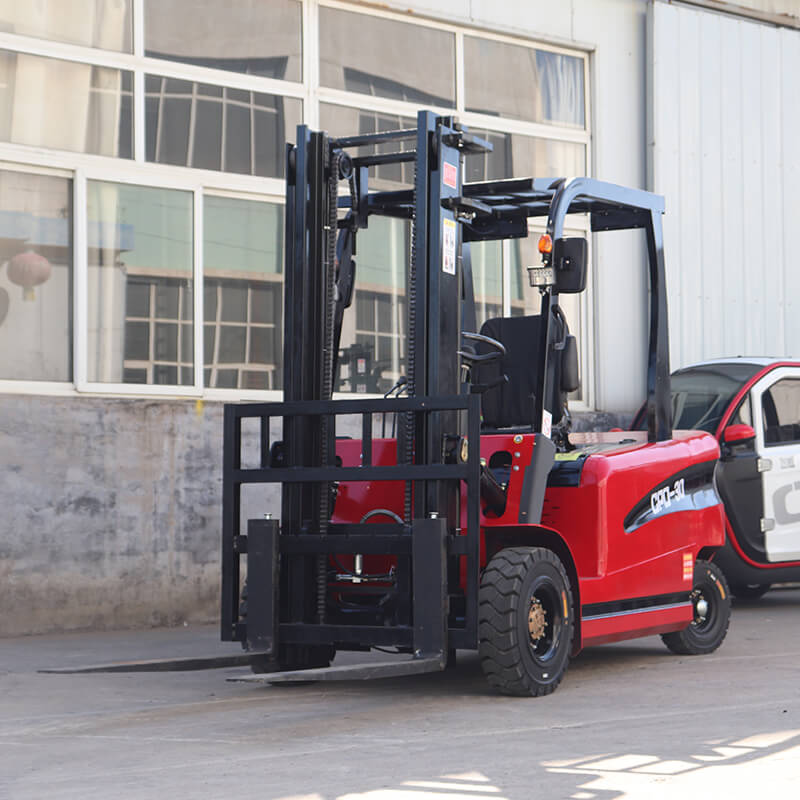
Cold storage environments represent the ultimate stress test for material handling equipment. Sub-zero temperatures routinely destroy equipment performance and cripple warehouse productivity. Standard power sources simply cannot survive these brutal extremes without suffering massive capacity drops. While traditional lead-acid systems have dominated indoor logistics for decades, they fundamentally struggle in freezing conditions. The chemical limitations of legacy batteries become glaring operational liabilities inside commercial freezers. Transitioning to a lithium battery forklift is no longer just a sustainability initiative. It is a calculated operational upgrade engineered to eliminate temperature-induced downtime entirely. You will learn how modern power systems reclaim lost battery capacity and remove hazardous maintenance from cold zones. We will also explore the scientific mechanisms behind thermal stability and provide an actionable framework for upgrading your facility's fleet.
Key Takeaways
Traditional lead-acid batteries lose up to 50% of their usable capacity in cold storage, while lithium-ion retains optimal performance through integrated thermal management.
Opportunity charging inside the cold zone eliminates the labor and safety risks associated with battery swapping.
Adopting lithium technology requires upfront planning for charger placement and condensation management when moving between temperature zones.
The Impact of Sub-Zero Environments on Electric Forklift Fleets
The Chemical Reality
Freezing temperatures wreak havoc on traditional power sources. Inside a standard lead-acid battery, sulfuric acid electrolyte thickens significantly. This happens rapidly as temperatures plunge below freezing. This physical thickening drastically increases internal electrical resistance. High resistance prevents electrons from flowing freely. It severely restricts both discharge and charging cycles. Usable capacity drops by 30% to 50% in standard cold storage conditions. A battery rated for eight hours of runtime might barely survive four hours. Operators face constant anxiety. They worry about equipment stalling inside deep freezer aisles. A stranded electric forklift requires an immediate rescue operation. Another vehicle must tow it out. This disrupts your entire warehouse workflow. Lost productivity cascades through your supply chain. You miss critical shipping deadlines.
The Voltage Drop Problem
Reduced capacity triggers a dangerous chain reaction. When battery voltage sags, components compensate automatically. Drive motors and hydraulic pumps draw higher electrical current. This excess current generates unintended heat within sensitive internal wiring. Components begin to overheat despite the freezing ambient environment. Over time, this thermal stress accelerates mechanical wear. It causes premature motor failure. The equipment feels sluggish. Lifting speeds drop significantly. Your entire operational throughput suffers. The forklift simply cannot maintain its rated performance metrics. Operators struggle to hit their hourly pallet targets. Maintenance teams spend hours replacing burned-out contactors. You lose money every minute the equipment sits idle.
The Battery Swapping Bottleneck
Changing a legacy battery requires military precision. You cannot simply swap it anywhere. Operators must drive to a designated battery room. This room is usually located far from the freezer. The travel time alone wastes fifteen minutes per trip. Once there, the real danger begins. A typical lead-acid battery weighs over two thousand pounds. Workers must use overhead gantry cranes. Sometimes they use specialized pallet jacks. The physical transfer poses severe crushing risks. Acid spills remain a constant threat. One small splash causes severe chemical burns. The process also invites condensation problems. When cold steel hits warm warehouse air, moisture blooms instantly. Water drips into sensitive battery connections. It corrodes the terminals. It creates a path for stray electrical currents. You lose hours of productive labor every single day to this outdated routine.
Thermal Stability: The Science Behind the Lithium Battery Forklift
Integrated Heaters
Cold temperatures slow down chemical reactions. Lithium cells require precise thermal management to perform safely. Engineers solve this using integrated heating systems. A premium lithium battery forklift contains smart thermal pads. These pads wrap around the internal battery modules. The Battery Management System continuously monitors ambient temperatures. It checks the internal cell core data every second. If the core drops below optimal levels, heaters activate automatically. They draw a tiny amount of power from the battery itself. The pads warm the cells gently and evenly. They maintain an optimal internal climate. The forklift operates as if it were in a warm room. The ambient freezer temperature becomes completely irrelevant. You get maximum performance in a harsh sub-zero environment.
Continuous Voltage Delivery
Voltage stability defines operational efficiency. Lead-acid power follows a sloping curve. As you use the energy, the voltage drops steadily. At fifty percent capacity, the forklift feels sluggish. Lift speeds decrease noticeably. Travel speeds crawl to a halt. Operators hate this fading performance. It ruins their piece-rate metrics. Lithium chemistry offers a completely flat discharge curve. The voltage stays consistently high. It delivers full power from a full charge down to five percent. The hydraulic pumps receive maximum voltage constantly. You lift heavy pallets just as fast at the end of the shift. Drive motors accelerate sharply every time. Your throughput remains absolutely consistent hour after hour.
Sealed Cell Architecture
Legacy batteries need to breathe constantly. They vent hydrogen gas during the charging phase. You must leave the cell caps slightly loose. This open design causes massive problems in cold storage. Freezing temperatures can stratify the liquid acid. Water separates and freezes at the top. The expanding ice easily cracks the plastic casing. Acid leaks out and destroys the metal battery tray. Lithium cells use a tightly sealed architecture. Manufacturers weld the aluminum cell casings completely shut. No liquids can escape. No gases ever vent into your warehouse. You never have to add distilled water. You never have to scrub green corrosion off battery cables. The sealed design also blocks external moisture from entering. This protects delicate internal sensors from high warehouse humidity.
Quantifying the ROI: Reducing Downtime in Multi-Shift Operations
In-Zone Opportunity Charging
Opportunity charging revolutionizes multi-shift warehouse schedules. Instead of swapping heavy packs, operators simply plug the equipment into a fast charger. They do this during standard scheduled breaks. You can stage these chargers directly inside the cold storage area. Alternatively, you can place them immediately adjacent to the freezer doors. A fifteen-minute plug-in during a coffee break adds significant runtime. A thirty-minute charge over lunch replenishes the battery further. The equipment never has to leave the production zone. This continuous operation eliminates dead travel time entirely. Workers no longer waste effort driving back and forth to a distant charging room.
Table: Operational Comparison in Cold Storage (Lead-Acid vs. Lithium)
Operational Metric
Traditional Lead-Acid
Lithium Technology
Usable Capacity at -20°C
Loses up to 50%
Retains nearly 100% (via heaters)
Discharge Curve
Sloping (fading performance)
Flat (consistent full power)
Charging Method
Swap room required
In-zone opportunity charging
Daily Maintenance
Watering, cleaning required
Zero maintenance
Condensation Risk
High (due to swap travel)
Low (stays in cold zone)
Eliminating the Battery Room
Traditional charging rooms consume massive amounts of valuable warehouse real estate. Facilities dedicate hundreds of square feet to this dead space. You must install charging racks, watering stations, and ventilation hoods. You also need expensive acid-spill containment systems. Switching to a modern fleet allows you to reclaim this square footage. You can convert the old battery room into revenue-generating storage racks. You might use it for high-velocity staging areas instead. Removing centralized charging infrastructure drastically reduces your facility overhead. It also eliminates the need for expensive hydrogen gas monitoring systems. Your warehouse becomes safer and far more profitable.
Zero Daily Maintenance
Operational expenses plummet when you eliminate daily battery maintenance. Lead-acid fleets require rigorous watering schedules. They need weekly equalization charges. Staff must perform constant terminal cleaning. Warehouse workers must dedicate hours each week to these non-productive tasks. Modern power systems require zero daily maintenance. Operators can focus entirely on throughput and order fulfillment. By removing hazardous maintenance routines, you also lower workplace injury risks. You reduce the frequency of workers' compensation claims related to heavy battery handling. Your labor force becomes more efficient and much safer overall.
Implementation Realities: Managing Condensation and Infrastructure
The Condensation Challenge (Dew Point)
Moisture presents the most significant operational risk in cold chain logistics. When an electric forklift exits a deep freezer, it enters a warm ambient dock. It hits the dew point immediately. Condensation instantly forms on all exposed metal. It covers critical electrical components. If the operator drives that wet equipment back into the freezer, the pooled moisture turns to ice. Repeated freeze-thaw cycles destroy microswitches. They cause severe electrical shorts. They freeze mechanical linkages solid. Ice buildup on tires also creates dangerous traction loss on smooth concrete floors. You must manage this transition carefully to prevent catastrophic equipment failure.
Mitigation Strategies
Proper deployment planning neutralizes the condensation threat entirely. We recommend three specific strategies to protect your fleet from moisture damage:
Keep equipment in the cold zone: In-zone charging allows the forklift to remain at sub-zero temperatures permanently. This prevents the dew point reaction from ever occurring.
Utilize transition staging areas: If equipment must leave the freezer, park it in a refrigerated dock. This allows the cold metal to warm up slowly before hitting humid ambient air.
Deploy heavy-duty air blowers: If a wet forklift must re-enter the freezer, dry it completely first. Use industrial fans to blast moisture out of the electrical harnesses.
Electrical Grid Considerations
Fast-charging advanced batteries requires robust electrical infrastructure. These modern systems draw significantly higher peak electrical loads. They pull more power than traditional trickle chargers. Before committing to a fleet-wide deployment, conduct a comprehensive audit. Check your facility’s electrical grid capacity carefully. Verify peak kilovolt-ampere limits on your main breaker panels. Assess the voltage drops across long wire runs into the freezer zone. Consult with your local utility provider regarding peak demand charges. You may need to stagger charging schedules using smart chargers. This helps avoid spiking your facility's peak energy demand during busy shifts.
Buyer’s Framework: Specifying Your Next Cold Storage Electric Forklift
BMS (Battery Management System) Evaluation
The Battery Management System acts as the brain of your power source. Not all BMS units can handle commercial freezers. Standard indoor units will fail completely in extreme cold. You must demand a cold-storage specific BMS from your vendor. Ask them how the system handles low-temperature charge lockouts. A cold lithium cell cannot accept a fast charge safely. Pushing high amps into a frozen cell causes permanent lithium plating. A smart BMS prevents this automatically. It locks out the incoming charge current initially. It redirects the wall power to the internal heating pads first. Once the core reaches a safe temperature, it opens the charging circuit.
IP Ratings and Sealing
Moisture always finds a way into cheap equipment. You need industrial-grade protection. We rely on the Ingress Protection (IP) rating system to verify equipment sealing. A forklift operating in a freezer must have high IP ratings. Look for a minimum rating of IP65 for all electrical enclosures. The first digit means the enclosure is entirely dust-tight. The second digit means it withstands low-pressure water jets. High IP ratings keep condensation out of the microswitches. They protect the main controller board from devastating short circuits. They also allow your sanitation crew to wash the equipment safely. Food-grade cold storage facilities require frequent high-pressure washing protocols.
Warranty Exclusions
Sales brochures promise incredible performance. The actual warranty document tells the real story. You must read the fine print carefully. Many standard warranties include strict temperature clauses. They explicitly exclude continuous operation in sub-zero environments. If you deploy a standard battery in a freezer, you void the warranty immediately. You must request a specific cold-storage conditioning package. This package upgrades the internal heaters and seals. Ensure the vendor explicitly writes your operating temperatures into the warranty contract. Define your multi-shift usage patterns clearly. Demand written confirmation that the coverage includes your specific commercial freezer application. Do not accept verbal promises from sales representatives.
Conclusion
Upgrading your material handling fleet requires precise strategic planning. Sub-zero temperatures do not forgive poorly specified equipment. Traditional power sources simply cannot meet the demands of modern cold chain logistics. Their chemical limitations cause massive productivity losses daily. Operators waste critical hours swapping heavy batteries. Maintenance teams spend weekends cleaning acid spills. Transitioning to advanced lithium technology solves these physical challenges entirely. Integrated thermal management keeps the equipment running at peak performance. The flat discharge curve ensures fast lifting speeds all day long. Opportunity charging reclaims your wasted warehouse space. It keeps your operators safely on their equipment. By eradicating daily maintenance, you streamline your entire logistics workflow. This technological upgrade maximizes your warehouse efficiency. It eliminates temperature-induced downtime completely. It proves to be the most reliable choice for multi-shift frozen operations.
Do not guess your operational energy requirements. Every commercial freezer runs on a unique schedule. We strongly encourage logistics managers to conduct a comprehensive facility power study. Contact your equipment vendor today. Request a formal pilot program for your warehouse. Ask them to deploy a test unit directly into your harshest freezer aisle. Measure the exact energy consumption during a peak shift. Track how often operators utilize opportunity chargers. Calculate the precise efficiency gains before executing a massive fleet rollout. Real-world data ensures you make the absolute best equipment investment for your facility.
FAQ
Q: Can you charge a lithium forklift battery inside a commercial freezer?
A: Yes, you can charge them safely inside a freezer. The battery must contain integrated internal heaters. The charging unit itself must also be explicitly rated for sub-zero environments. Many warehouse managers prefer placing charger units just outside the freezer walls. They run charging cables through sealed wall ports. This setup protects sensitive charger electronics from extreme cold. It keeps the forklift stationed conveniently just inside the freezer threshold.
Q: How long does a lithium battery forklift last in cold storage compared to lead-acid?
A: Traditional lead-acid lifespans degrade severely in cold applications. They lose up to 30% of their life expectancy. They often fail completely within three to four years. Conversely, properly specified lithium batteries offer a seven to ten-year lifespan. They experience negligible capacity degradation. Their active thermal management systems protect the internal chemistry from cold-weather stress. They easily outlast legacy alternatives by a significant margin.
Q: Do lithium batteries still experience capacity drop in the cold?
A: The capacity drop is extremely minimal. The battery management system uses a very small portion of stored energy to power internal heating elements. This causes a slight reduction in total operational runtime. However, the battery completely avoids the massive 50% chemical capacity loss that cripples lead-acid alternatives. The forklift maintains full lifting power and drive speed continuously until the battery depletes.
We are fully committed to the production, research and development, and sales of small and medium-sized machinery. We look forward to cooperating with you!

 English
 العربية
 Français
 Русский
 Español
 Português
 Deutsch
 italiano
 日本語
日本語 한국어
한국어 Nederlands
 Tiếng Việt
 ไทย
ไทย Polski
 Türkçe
 Bahasa Melayu
 Bahasa Indonesia
 magyar
 Română
 Čeština
 Српски
 हिन्दी
 Slovenčina
 Slovenščina
 Norsk
Norsk Svenska
 Ελληνικά
 Suomi
Suomi Dansk
Dansk Shqip
Shqip Hrvatski
 Afrikaans
 Gaeilge
 Eesti keel
 latviešu
 Български
 ქართული
 Lietuvių