
 EN
EN
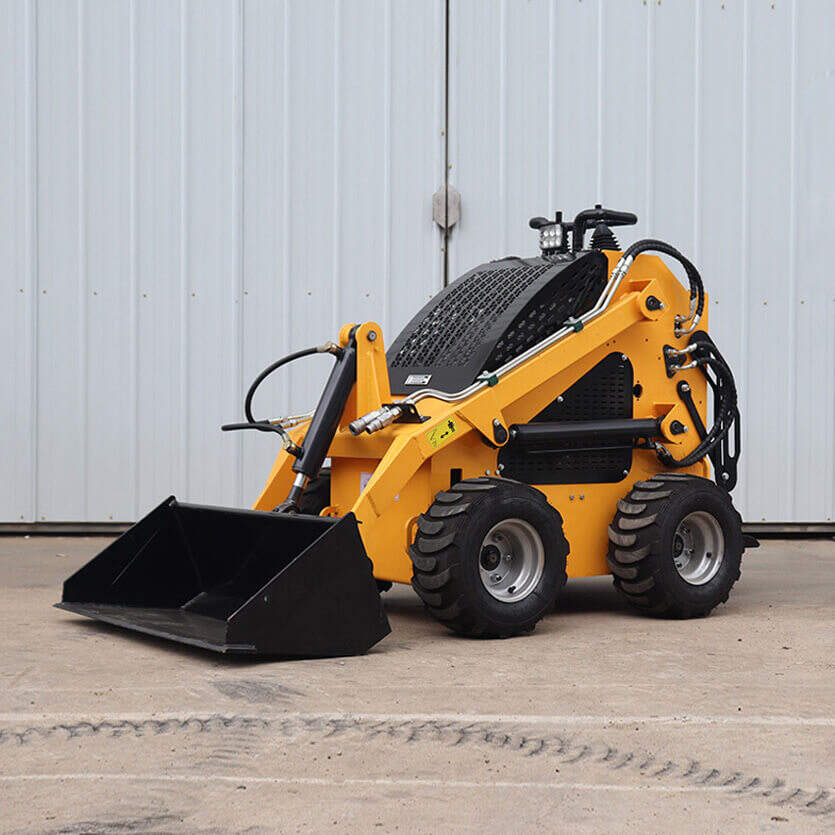
Superior Maneuverability in Tight Spaces: A Hallmark of Skid Steer Loaders
Zero-Turn Radius and Compact Footprint: How Mini Skid Steer Loaders Navigate Confined Areas
Mini skid steer loaders work wonders in cramped spaces where regular machinery just can't fit. They have those zero turn features and some models are only 36 inches wide. The real magic happens when these machines can spin around inside their own footprint. No need for those awkward three point turns that waste so much time in tight alleys or between buildings. A bunch of field tests back this up too, especially ones looking at how equipment moves through limited spaces according to Kovatera's findings from last year. Many operators actually finish jobs 30 percent quicker in city environments because they spend less time moving the machine around instead of working on actual tasks.
Real-World Application: Completing a Basement Egress Project with Limited Access
In Connecticut, a contractor managed to dig out a basement emergency exit through a narrow 52 inch space using a compact 48 inch wide mini skid steer loader. The machine had a tight turning radius of around 62 inches which allowed for careful bucket movements without messing up any of the old plumbing or electrical wiring something that would have been impossible with regular sized equipment. What's interesting is how this approach actually saved money too. The whole job came in at 18 percent below the original budget estimate simply because there was so much less need for hand digging and other manual work throughout the process.
Optimizing Job Site Movement: Path Planning on Crowded Urban and Residential Sites
These days, urban contractors are turning to path planning software to figure out the best ways to move those little skid steer machines through crowded job sites. When crews program routes ahead of time around all those pesky obstacles like trash bins, building frames, and cars blocking the way, they actually cut down wasted engine hours by about 22%, according to industry reports from last year. And look at this interesting trend: most home renovation jobs need roughly 41% less room for machinery to maneuver than what was typical back in 2019. That means tighter spaces aren't such a nightmare anymore for these compact machines.
Growing Use Indoors and in Sensitive Zones Due to Agile Design
Indoor workspaces are seeing more tracked mini skid steers in action these days because they only put down around 3.5 PSI on floors which is actually lighter than what most adults weigh when they take a step. Places like museums and hospitals really appreciate this feature as they move stuff around without worrying about scuffing up expensive flooring materials. And guess what? The cost savings from not having to replace damaged floors adds up to roughly half of what would normally be spent on protection measures. Looking at manufacturing trends, there's been quite a jump in demand for these specialized indoor models over the past couple years. Since 2021 alone, sales shot up by nearly three quarters, mostly because cities across the country started implementing tougher regulations regarding interior construction standards.
Unmatched Versatility Through Attachment Integration
One Machine, Multiple Functions: The Role of Quick-Change Attachments in Small-Scale Projects
The mini skid steer loader cuts down on needing all sorts of different machines because it lets workers switch attachments really fast. Most operators can go from digging tasks to lifting stuff within just over a minute or so when they use those standard quick connect systems that come with these machines. Think of them as basically a toolbox mounted on wheels. According to some research done last year looking at how equipment gets used across various construction sites, this kind of versatility actually helps cut down waiting time between jobs by around 44%. That makes a big difference especially on smaller worksites where there simply isn't room for lots of different pieces of machinery sitting around doing nothing.
Key Attachments for Skid Steer Loader Efficiency: From Augers to Brooms
With auger attachments, contractors can install around fifty fence posts each workday with pretty good depth control. Meanwhile, those heavy duty pallet fork attachments manage to lift and move roughly three thousand pounds even when conditions get rocky or uneven. When it comes to cleaning up job sites, hydraulic brooms really shine. They sweep away debris covering approximately four thousand three hundred square feet every hour, which basically equals what three people working together could accomplish manually. That makes these machines indispensable for quick site cleanups after construction projects wrap up. For winter maintenance needs, tracked equipment fitted with snow blowing systems can tackle snow drifts up to twelve inches deep, clearing about a quarter acre per hour through harsh weather conditions. These specs matter because they translate into actual time savings and cost efficiencies for operations managers dealing with seasonal challenges.
Case Study: Landscaping Contractor Maximizing Productivity with 12 Attachments in One Season
A Midwest landscaping team completed 27 residential hardscaping jobs using one mini skid steer and a rotating set of 12 attachments. Tools like trenchers, grapple buckets, and cold planers allowed them to boost productivity by 30% compared to relying on single-function machinery.
Strategy: Building an Efficient Attachment Rotation System for Residential Jobs
Top-performing contractors streamline operations by pre-staging attachments based on daily workflows. A proven method involves color-coding hydraulic couplers and organizing tools on dedicated trailers. This system cuts swap times to under 90 seconds—essential when managing more than 15 tool changes per day on complex residential sites.
Mastery of quick-change techniques amplifies ROI: a $40/hour machine effectively functions as five specialized tools, reducing equipment costs per project by up to 58%.
Surface Protection and Low Ground Pressure with Tracked Models
How Tracked Skid Steer Loaders Minimize Ground Disturbance on Delicate Surfaces
Tracked machines cut down on ground pressure somewhere around 60 to 75 percent compared with their wheeled counterparts because they spread out the weight along the entire track. The pressure stays under 5 pounds per square inch even when fully loaded, which means these machines won't damage delicate areas such as newly planted grass or old stone pathways. A recent report from AscendUM Machinery in 2023 found that in almost all cases (about 92%) where landscapers used tracked equipment instead of regular wheel-based machinery, there was no noticeable soil compaction issues that plague many traditional approaches.
Case Study: Installing Pavers on a High-End Driveway Without Surface Damage
On a luxury home project, contractors installed a circular paver driveway using a tracked mini skid steer to transport 18 tons of material across decorative concrete. By switching between rubber and steel tracks, they avoided cracks and finished 23% faster than conventional methods—eliminating $8,500 in expected repair costs.
Wheeled vs. Tracked Mini Skid Steers: Evaluating Surface Sensitivity Needs
| Factor | Tracked Models | Wheeled Models |
|---|---|---|
| Ground Pressure | 3.2 PSI (avg) | 22 PSI (avg) |
| Soft Soil Stability | 98% No Rutting | 34% No Rutting |
| Hard Surface Speed | 5.3 MPH | 8.1 MPH |
| Turn Damage Potential | Zero-Scar Turns | Frequent Scuff Marks |
Data confirms that tracked models dominate in surface-sensitive work, while wheeled versions offer higher speeds on paved surfaces. Most landscape professionals now maintain both types, with tracked units handling 78% of residential jobs.
Cost-Effectiveness and Strong ROI for Small Contractors
Mini skid steer loaders deliver significant financial benefits for residential and landscaping contractors. Acquiring one costs 40–60% less than a full-size equivalent (EquipmentWatch 2023), lowering capital investment without sacrificing hourly output.
Lower Acquisition and Operating Costs Compared to Full-Size Skid Steer Loaders
Fuel savings alone amount to $8–$14/hour versus traditional models, a major advantage given diesel prices remain 28% above 2020 averages (U.S. EIA 2023). Simpler drivetrains and fewer components also reduce maintenance needs.
| Cost Factor | Mini Skid Steer Loader | Full-Size Equivalent |
|---|---|---|
| Purchase Price | $32k - $45k | $65k - $85k |
| Hourly Fuel Use | 0.8 - 1.2 gal | 2.5 - 3.2 gal |
| Annual Maintenance | $1,200 | $3,800 |
Calculating Long-Term Return on Investment in Residential and Landscaping Projects
Contractors typically achieve ROI within 6–14 months when using mini skid steers for fence installations, garden prep, and hardscaping. Industry analysts emphasize three key drivers: utilization rates, cycle time reductions, and attachment versatility in calculating long-term value.
Case Study: Achieving Break-Even After Six Months of Rental Use
A Midwest landscaping business reached break-even on a $38k tracked model after six months by completing 17 driveway projects in one season. Dual-shift operation and 84% utilization of auger and grapple attachments were critical to fast payback.
Rising Trend: Equipment Leasing Among Independent Contractors
Over 62% of solo operators now lease mini skid steer loaders (AED 2023), avoiding depreciation while accessing late-model equipment. Flexible options like 8-month seasonal leases align perfectly with peak demand in landscaping and snow removal.
Future Innovations: Electric and Smart Mini Skid Steer Loaders
Emergence of Electric Skid Steer Loaders for Quiet, Sustainable Operation
The electric mini skid steer is becoming a game changer in cities where noise complaints and emission rules are getting stricter every day. These machines run around 68 decibels, which is actually quieter than most people talking normally, and they don't emit any exhaust fumes whatsoever. Looking ahead, industry reports suggest that by 2026 nearly half (about 42%) of all new residential construction equipment purchases could be electric. This growth is being driven mainly by green building requirements across many municipalities, plus operators save roughly four grand each year on fuel costs alone. Most top brands currently available can last through an entire workday on a single charge thanks to their eight hour runtime capability, and many come equipped with fast charging options so crews aren't stuck waiting around between jobs whether working inside warehouses or outside on job sites.
Case Study: Deploying an Electric Mini Skid Steer in a Noise-Restricted Urban Zone
During the 2024 street improvement work in Old Town, crews brought in an electric mini skid steer to lay down new utility lines under those tricky cobblestone roads. The machine's narrow frame at just 24 inches allowed it to squeeze through the 3 foot wide alleys between buildings. What really stood out was how quietly it ran, staying well within the city's 55 decibel limit for daytime operations. Workers reported cutting their labor time by around 40% compared to previous sections where they had to deal with noisy gas equipment. Plus, there were zero complaints from residents this time around, something that hadn't happened when louder machinery was used before.
Preparing for Next-Gen Compact Equipment with Smart Technology Integration
Modern mini skid steers are becoming intelligent worksite assets through integrated technology:
- Telematics systems predict maintenance needs 85% earlier than manual checks (2025 Equipment Innovation Report)
- Auto-dig modes adjust attachment force in real time to avoid underground utility strikes
- GPS boundary alerts prevent accidental property damage on congested sites
A 2025 trial found smart-enabled loaders reduced fuel waste by 30% via optimized hydraulic flow. As autonomous navigation advances, self-guided mini skid steers using LiDAR for mapping tight spaces are already being prototyped for basement excavation applications.
FAQs
What is a mini skid steer loader?
A mini skid steer loader is a compact machine used in construction and landscaping for various tasks. It’s known for its small footprint and versatility through the integration of various attachments.
How do mini skid steer loaders benefit urban and sensitive zones?
Mini skid steer loaders offer numerous advantages in urban and sensitive zones, including superior maneuverability in tight spaces, reduced ground pressure, which prevents damage in delicate environments, and quieter operations beneficial in noise-restricted areas.
What attachments are frequently used with mini skid steer loaders?
Common attachments for mini skid steer loaders include augers, pallet forks, hydraulic brooms, snow-blowing systems, trenchers, grapple buckets, and cold planers, each contributing to increased efficiency in specific tasks.
How do mini skid steer loaders compare to full-size loaders?
Mini skid steer loaders are more cost-effective, requiring lower acquisition and operating costs than full-size loaders while providing substantial versatility and productivity benefits.
What future innovations can be expected in mini skid steer loaders?
Future innovations in mini skid steer loaders include the emergence of electric models for sustainable operations and smart technology integration like telematics, auto-dig modes, and GPS systems for enhanced functionality.
Table of Contents
-
Superior Maneuverability in Tight Spaces: A Hallmark of Skid Steer Loaders
- Zero-Turn Radius and Compact Footprint: How Mini Skid Steer Loaders Navigate Confined Areas
- Real-World Application: Completing a Basement Egress Project with Limited Access
- Optimizing Job Site Movement: Path Planning on Crowded Urban and Residential Sites
- Growing Use Indoors and in Sensitive Zones Due to Agile Design
-
Unmatched Versatility Through Attachment Integration
- One Machine, Multiple Functions: The Role of Quick-Change Attachments in Small-Scale Projects
- Key Attachments for Skid Steer Loader Efficiency: From Augers to Brooms
- Case Study: Landscaping Contractor Maximizing Productivity with 12 Attachments in One Season
- Strategy: Building an Efficient Attachment Rotation System for Residential Jobs
- Surface Protection and Low Ground Pressure with Tracked Models
- Cost-Effectiveness and Strong ROI for Small Contractors
- Future Innovations: Electric and Smart Mini Skid Steer Loaders
- FAQs