
 EN
EN
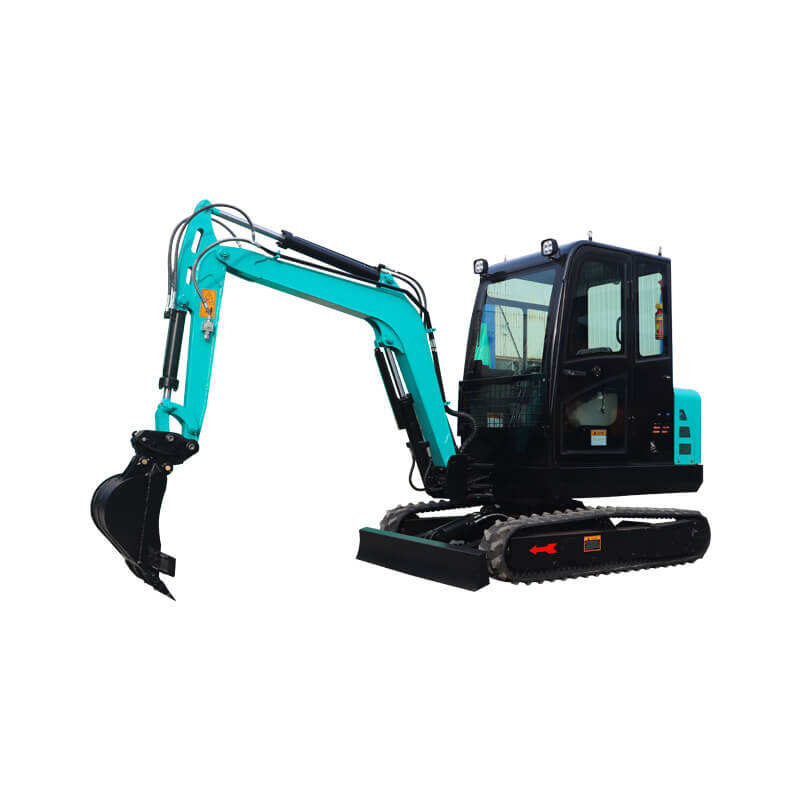
Mini Excavators – Growing Demand in Urban & Residential Builds
The push toward urban living has really boosted demand for smaller construction gear over the last few years, with mini excavators leading the charge. Cities are getting taller while backyards keep shrinking, so these little machines handle all sorts of tight spots nobody else can manage. They zip through narrow alleyways, get under power lines that barely clear their heads, and work inside backyard fences without tearing anything up. What sets them apart? These babies can spin around completely in areas just over a meter wide, which explains why contractors love them for fixing up old infrastructure or building those new townhouses popping up everywhere nowadays.
Advantages Over Full-Sized Excavators in Confined Areas
Mini excavators outperform larger models in tight spaces through key design innovations:
- Zero Tail Swing (ZTS) designs: Eliminate rear overhang during rotation, avoiding collisions with walls or obstacles
- Retractable undercarriages: Reduce width by up to 20%, enabling passage through standard gates
- Precision controls: Allow grading accuracy within 2 cm near existing structures
A 2023 study found that projects using mini excavators in confined areas completed tasks 37% faster than those relying on manual labor or bulky machinery. Weighing under 2 tons, they also reduce ground pressure by 60% compared to full-sized excavators, protecting sensitive surfaces like paved driveways.
Enhanced Efficiency and Productivity in Restricted Spaces
The compact size combined with those articulated booms really cuts down on how long it takes to reposition the machine, which means operators can keep moving without losing momentum even when working through tight spaces. The adjustable tracks plus those dual function pedals let workers move the arm while traveling at the same time, shaving off around 15 to maybe 20 seconds for each scoop they dig. Landscaping crews find this makes a big difference too, since they can now prep about 10 backyard sites every week instead of just 6 or 7 as was common with older equipment. Contractors tell us that being able to get so close to obstacles without damaging anything has helped avoid expensive redesign work in most residential retrofit jobs we've seen lately.
Key Design Features That Enable Superior Performance in Confined Spaces
Retractable undercarriages for improved access and mobility
Retractable undercarriages allow mini excavators to adjust widths between 3’ and 5’, fitting through narrow gates while expanding for stability during operation. This adaptability ensures seamless transitions from transport to active digging without compromising safety or performance.
Zero and minimal tail swing configurations explained
Zero-tail-swing models eliminate rear overhang, enabling full 360° rotation in spaces under 10’ wide. Minimal-swing variants limit overhang to less than 12”, making them ideal for utility work near building foundations where clearance is limited.
Maneuverability and control advantages of compact size
A 5.5-ton class mini excavator can operate effectively in an 8’x8’ area, with joystick-controlled travel speeds under 3 mph for precise positioning. This level of control reduces repositioning time by 35% on congested job sites, according to industry analyses including insights from equipment efficiency studies.
Critical technical specifications impacting real-world performance
Modern mini excavators feature hydraulic systems with 15–20% higher flow rates than previous generations, delivering up to 3,800 psi for demanding attachments. Auxiliary circuits support simultaneous use of breakers and grapples, while an 8” maximum digging depth balances capability with spatial constraints.
How to Select the Right Mini Excavator for Your Project
Choosing the right model requires evaluating machine specs, site limitations, and operational goals.
Matching Mini Excavator Size and Class to Job Requirements
Weight determines application suitability–1–3 ton units are ideal for residential landscaping and utility work, while 5–8 ton models handle commercial digging and roadside drainage. Industry data shows 68% of contractors prioritize reach over raw power when working under 8’ overhead clearances (CEMA 2023).
| Weight Class | Ideal Applications | Max Reach |
|---|---|---|
| 1-3 tons | Tight yards, indoor demolition | 8-12 ft |
| 3-5 tons | Urban utility lines, pool excavation | 12-16 ft |
| 5-8 tons | Roadside drainage, compact site prep | 16-20 ft |
Choosing Optimal Arm Length and Reach for Your Worksite
Arm configuration affects spatial flexibility. Telescopic booms extend side reach by 22% compared to standard arms, reducing the need for frequent repositioning during trenching near structures. Field tests confirm that zero-tail swing configurations reduce required workspace by 40% versus conventional models.
Evaluating Site Conditions: Ground Stability and Clearance Access
Ground pressure between 0.5–1.2 psi prevents sinking in soft soils, while steel tracks offer 18% better traction on slopes (ICM 2023). Always verify entry path dimensions–compact units require a minimum 35” width, compared to 47” for mid-size excavators–to ensure smooth site access.
Attachments and Customizations That Expand Mini Excavator Capabilities
Essential attachments: augers, breakers, grapples, and more
When equipped with the right attachments, mini excavators transform into versatile workhorses capable of tackling multiple tasks. Take hydraulic breakers for instance they can hit concrete surfaces around 1,200 times every minute, making quick work of demolition jobs. The auger attachment is another game changer, drilling those 18 inch diameter post holes in less than a minute and a half according to recent field testing by Caterpillar back in 2023. At recycling facilities, grapple attachments make all the difference in sorting through debris with much greater accuracy than traditional methods. Some operations have reported needing only half as many workers for certain tasks once these attachments came into play during controlled experiments last year.
| Attachment | Optimal Use Case | Productivity Gain |
|---|---|---|
| 24" Rock Auger | Foundation piling | 50% faster cycle times |
| 1,500 lb Breaker | Sidewalk removal | 3:1 ROI vs. manual demo |
| Brush Grapple | Land clearing | 60% reduced hand labor |
How customization enhances versatility across applications
Tiltrotators and other modular upgrades give operators full 360 degree control over their tools when doing detailed grading work. Quick couplers are another game changer since they let workers switch attachments in less than two minutes flat. According to AEM data, roughly 6 out of 10 contractors who use these kinds of modifications finish city projects needing about 40% fewer machines overall. When companies combine different attachments like compaction wheels for filling gaps behind walls or ripper attachments that dig through frozen ground layers, they can tackle multiple complicated jobs all within one day's work. This saves time and money especially on tight job sites where space is at a premium.
FAQs on Mini Excavators
Why are mini excavators preferred for urban and residential projects?
Mini excavators excel in urban and residential projects due to their compactness, ability to maneuver in tight spaces, and low ground pressure minimizing surface damage.
What are the main attachments used with mini excavators?
Common attachments include hydraulic breakers, augers, and grapples—each with specific uses such as demolition, post-hole digging, and debris sorting.
How do you choose the right mini excavator?
Select a mini excavator based on your project’s specifications including ground pressure, reach, site limitations, and required attachments.
Table of Contents
- Advantages Over Full-Sized Excavators in Confined Areas
- Enhanced Efficiency and Productivity in Restricted Spaces
- Key Design Features That Enable Superior Performance in Confined Spaces
- How to Select the Right Mini Excavator for Your Project
- Attachments and Customizations That Expand Mini Excavator Capabilities
- FAQs on Mini Excavators